
Where is the cheapest state to buy a semi-truck?
Where Is the Cheapest State to Buy a Semi-Truck?
Buying a used semi-truck is a major investment, and the location where you buy can affect the total cost. Many buyers search for the cheapest state to buy a semi-truck, hoping to save money on the purchase price, sales tax, and other expenses.
However, there is no single state that is always the cheapest for every buyer. Used semi-truck prices vary depending on the truck's age, mileage, brand, specifications, maintenance history, and local supply. Taxes, registration fees, transportation costs, and repair expenses can also change the final amount you pay.
> Quick Answer: States such as Oregon, Montana, New Hampshire, and Delaware are often worth considering because they do not have a general state sales tax. However, the cheapest place to buy a semi-truck depends on the truck price, taxes, transportation costs, condition, and your home state's rules.
What Makes a State Cheap for Buying a Semi-Truck?
When comparing different states, do not look only at the advertised price of the truck.
The actual cost can include:
- Truck purchase price
- Sales or use tax
- Registration fees
- Dealer fees
- Transportation costs
- Inspection costs
- Immediate repairs
- Tire replacement
- Insurance
- Financing costs
A truck advertised at $50,000 may not be cheaper than a $55,000 truck if the first truck requires expensive repairs or transportation.
For this reason, buyers should compare the total purchase cost, rather than only the listing price.
States With No General Sales Tax
One factor that makes certain states attractive to buyers is the absence of a general state sales tax.
Several states commonly considered by buyers include:
| State | General State Sales Tax | Important Consideration |
|---|---|---|
| Oregon | No | Vehicle-specific taxes and rules may apply |
| Montana | No | Certain local taxes may apply |
| New Hampshire | No | No general sales tax on goods |
| Delaware | No | Business gross receipts tax may apply |
| Alaska | No state sales tax | Local sales taxes may apply |
A lack of general sales tax can reduce the transaction cost, but it does not automatically mean that every used semi-truck in the state has a lower selling price.
> Important: Before buying a truck in another state, check the tax and registration rules that apply where the truck will actually be titled and operated.
Is Oregon a Cheap State to Buy a Semi-Truck?
Oregon is frequently considered by buyers because it does not have a general sales tax.
This can be important when purchasing an expensive commercial vehicle. For example, a tax difference of several percentage points on a $70,000 truck can represent thousands of dollars.
However, the actual cost still depends on the specific truck and the buyer's circumstances.
When comparing trucks in Oregon, consider:
- Purchase price
- Truck condition
- Mileage
- Maintenance history
- Transportation distance
- Registration requirements
- Applicable vehicle taxes and fees
A lower tax burden may be useful, but it should be compared with the complete cost of the transaction.
Is Montana a Cheap State to Buy a Semi-Truck?
Montana is another state that buyers may consider when comparing truck purchase costs.
Montana does not have a general sales tax, although certain local taxes can apply in specific circumstances.
However, tax savings should not be the only reason to choose a truck in Montana.
If the truck is located far away from your operating base, transportation costs can reduce or eliminate the savings.
Before buying, calculate:
Truck Price + Taxes and Fees + Transportation + Repairs = Total Cost
This gives you a more realistic comparison.
Is New Hampshire a Cheap State to Buy a Semi-Truck?
New Hampshire does not have a general sales tax on goods.
This can make the state interesting for buyers who are comparing transaction costs between different markets.
However, the availability of commercial trucks may differ from larger truck markets in other parts of the country.
A buyer should compare the actual truck price, specifications, condition, and transportation cost before making a decision.
Is Delaware a Cheap State to Buy a Semi-Truck?
Delaware does not impose state or local sales tax.
However, this does not mean that there are no taxes or fees associated with doing business in the state.
Delaware businesses can be subject to a gross receipts tax, which is different from a conventional sales tax.
Therefore, buyers should look at the complete transaction rather than assuming that buying in a state with no sales tax automatically produces the lowest total cost.
Does the State With the Lowest Tax Have the Cheapest Trucks?
Not necessarily.
Used semi-truck prices are affected by many factors, including:
- Supply and demand
- Number of trucks available
- Dealer inventory
- Fleet replacement cycles
- Truck age
- Mileage
- Engine configuration
- Transmission
- Axle configuration
- Maintenance history
- Previous use
- Local market conditions
Two identical trucks can have different asking prices even when they are located in different states.
This is why it is useful to compare several trucks with similar specifications before deciding where to buy.
Where Can You Find Lower-Priced Used Semi-Trucks?
Instead of searching for only one state, consider several types of markets.
Large Truck Dealer Markets
Large commercial truck markets often have more inventory.
A larger selection makes it easier to compare:
- Model year
- Mileage
- Engine
- Transmission
- Axle configuration
- Condition
- Asking price
More inventory does not guarantee lower prices, but it gives buyers more choices.
Fleet Replacement Markets
Large trucking fleets regularly replace older equipment.
When multiple similar trucks enter the used market at the same time, buyers may have an opportunity to compare several vehicles with similar specifications.
This can make it easier to determine whether a particular truck is reasonably priced.
Auction Markets
Used semi-trucks are also sold through auctions.
Auction prices can sometimes look attractive, but buyers should be careful because information about the truck's condition may be more limited.
Before buying an auction truck, check:
- Whether the truck can be inspected
- Whether the engine can be started
- Whether a test drive is available
- Maintenance records
- Accident history
- Title information
- VIN information
- Transportation costs
- Possible repair costs
A low auction price does not necessarily mean a low final cost.
Should You Buy a Semi-Truck From Another State?
Buying a semi-truck from another state can make sense when the overall savings are significant.
For example, imagine two similar trucks:
| Truck | Purchase Price | Transportation | Other Costs | Estimated Total |
|---|---|---|---|---|
| Truck A | $55,000 | $1,500 | $2,000 | $58,500 |
| Truck B | $58,000 | $500 | $1,500 | $60,000 |
Truck A has the lower purchase price and remains cheaper after the additional costs in this example.
But the result can change completely if Truck A needs major repairs.
This is why transportation and repair costs should always be included in your calculation.
How to Calculate the Total Cost
A simple formula can help you compare trucks:
Total Cost = Truck Price + Taxes + Fees + Transportation + Immediate Repairs
You can also include:
- Inspection
- Registration
- Insurance
- Tires
- Preventive maintenance
- Financing costs
- Parts replacement
For example:
| Cost | Example |
|---|---|
| Truck price | $60,000 |
| Transportation | $1,500 |
| Inspection | $300 |
| Immediate repairs | $2,500 |
| Registration and fees | $1,000 |
| Estimated total | $65,300 |
These numbers are only an example. Your actual costs will depend on the truck and location.
Can You Avoid Tax by Buying in Another State?
This is an important question for anyone considering an out-of-state purchase.
Buying a semi-truck in a state without a general sales tax does not automatically mean that you will never owe tax.
Depending on your situation, your home state may have rules involving:
- Use tax
- Vehicle registration
- Titling
- Commercial vehicle requirements
- Interstate operations
- Business taxes
Before completing a large commercial vehicle purchase, check the applicable rules in the state where the truck will be registered and operated.
> Tip: Always calculate your tax obligations before traveling to another state to purchase a truck. A tax-saving strategy that ignores your home state's rules can lead to unexpected costs.
What Is More Important Than the State?
The condition of the individual truck can be more important than its location.
For example, a $45,000 truck with serious engine problems may cost much more in the long run than a well-maintained $55,000 truck.
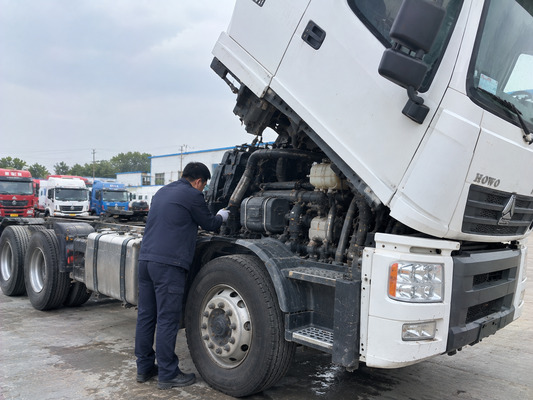
Before buying, inspect the major systems.
Engine
Check for:
- Oil leaks
- Coolant leaks
- Excessive smoke
- Unusual engine noises
- Warning lights
- Cooling-system problems
- Oil condition
Transmission
Check:
- Gear engagement
- Shifting performance
- Transmission leaks
- Unusual noises
- Clutch condition
Chassis and Frame
Look for:
- Cracks
- Bent components
- Severe corrosion
- Welding repairs
- Signs of previous accident damage
Tires and Brakes
Check:
- Tire tread
- Uneven tire wear
- Tire age
- Brake condition
- Air-system performance
Maintenance History
Ask the seller for:
- Service records
- Repair invoices
- Engine repair records
- Transmission repair records
- Tire replacement records
- Inspection documents
Is an Older Semi-Truck Always Cheaper?
Older trucks generally have lower purchase prices, but age alone does not determine value.
Two trucks with the same model year can have very different prices because of:
- Mileage
- Engine hours
- Maintenance history
- Accident history
- Truck specifications
- Previous use
- Tire condition
- Mechanical condition
A well-maintained older truck can sometimes be a more practical purchase than a newer truck with poor maintenance history.
When comparing prices, always compare trucks with similar specifications and condition.
Are Auction Trucks Cheaper?
Auction trucks can sometimes have lower purchase prices, but there can also be greater uncertainty.
A buyer may have limited information about:
- Previous repairs
- Maintenance
- Accident damage
- Engine condition
- Transmission condition
- Tire condition
If the truck requires major repairs after purchase, the initial savings may disappear quickly.
For this reason, an inspection is especially important when buying an auction truck.
How to Compare Semi-Truck Prices Between States
If you want to find a low-cost used semi-truck, compare several markets instead of focusing on one state.
A simple comparison table can look like this:
| State | Truck Price | Taxes/Fees | Transportation | Repair Estimate | Total Cost |
|---|---|---|---|---|---|
| State A | $55,000 | $0 | $2,000 | $1,500 | $58,500 |
| State B | $57,000 | $3,000 | $800 | $1,000 | $61,800 |
| State C | $53,000 | $4,000 | $1,200 | $2,500 | $60,700 |
| State D | $59,000 | $0 | $1,500 | $800 | $61,300 |
The actual numbers will vary, but this method allows you to compare the complete cost of different trucks.
What Should You Check Before Traveling to Buy a Truck?
Do not travel hundreds of miles based only on a low online asking price.
Before visiting the seller, request:
- VIN
- Mileage
- Engine information
- Transmission information
- Axle configuration
- Truck photos
- Engine photos
- Chassis photos
- Tire photos
- Maintenance records
- Accident information
- Title information
- Current asking price
This information allows you to eliminate unsuitable trucks before spending money on travel or transportation.
How Much Can You Save by Buying in a Cheaper State?
The potential savings depend on the purchase price and applicable tax rules.
For a hypothetical $70,000 truck:
- A 5% tax difference equals $3,500
- A 6% tax difference equals $4,200
- A 7% tax difference equals $4,900
- An 8% tax difference equals $5,600
These are simple examples, not estimates of what a particular buyer will actually owe.
Transportation, registration, local taxes, and home-state rules can change the final amount.
The important point is to compare the complete transaction cost.
Common Mistakes When Looking for the Cheapest Semi-Truck
Mistake 1: Looking Only at the Truck Price
The lowest advertised price is not always the lowest total cost.
Mistake 2: Assuming No Sales Tax Means No Tax
Your home state may have its own use-tax or registration requirements.
Mistake 3: Ignoring Transportation
A truck several states away may cost more to transport than expected.
Mistake 4: Skipping the Inspection
A low purchase price is not useful if the truck needs major repairs.
Mistake 5: Ignoring Maintenance History
A truck with complete maintenance records can be easier to evaluate than one with an unknown history.
Mistake 6: Comparing Different Trucks
A $50,000 truck with high mileage should not automatically be compared with a $60,000 truck with significantly lower mileage and different specifications.
Simple Checklist for Finding a Cheap Used Semi-Truck
Before buying, check:
- ☐ Compare prices in several states
- ☐ Check sales and use tax requirements
- ☐ Calculate transportation costs
- ☐ Compare similar truck models
- ☐ Check model year
- ☐ Check mileage
- ☐ Check engine condition
- ☐ Check transmission condition
- ☐ Inspect the chassis and frame
- ☐ Check tires and brakes
- ☐ Review maintenance records
- ☐ Check accident history
- ☐ Verify the VIN
- ☐ Verify title and ownership documents
- ☐ Get an independent inspection
- ☐ Estimate immediate repair costs
- ☐ Calculate the total purchase cost
Frequently Asked Questions
What is the cheapest state to buy a semi-truck?
There is no single state that is always the cheapest. Oregon, Montana, New Hampshire, and Delaware are worth considering because they do not have a general state sales tax, but the final cost also depends on truck price, condition, transportation, and applicable taxes and fees.
Is Oregon a good state to buy a used semi-truck?
Oregon can be attractive because it does not have a general sales tax. However, buyers should still consider vehicle-specific taxes, registration requirements, transportation, and the actual price and condition of the truck.
Can I buy a semi-truck in another state to save money?
Yes. An out-of-state purchase can reduce the total cost in some situations, but you should calculate transportation, taxes, registration, inspection, and repair expenses first.
Is a no-sales-tax state always cheaper?
No. A truck may have a higher purchase price in a no-sales-tax state, or transportation and other costs may eliminate the tax savings.
Should I buy the cheapest semi-truck I can find?
Not necessarily. A lower purchase price can come with higher repair and operating costs. Condition, maintenance history, specifications, and total ownership cost should also be considered.
Are auction trucks cheaper?
Auction trucks can sometimes have lower purchase prices, but buyers may face more uncertainty about the truck's condition and history.
Final Thoughts
So, where is the cheapest state to buy a semi-truck?
There is no universal answer.
States such as Oregon, Montana, New Hampshire, and Delaware can be worth considering because they do not have a general state sales tax. However, the cheapest truck for you may be located in a completely different state if the vehicle has a better price, condition, maintenance history, or lower transportation cost.
The best way to compare used semi-trucks is to calculate:
Truck Price + Taxes + Fees + Transportation + Inspection + Immediate Repairs
Do not choose a truck based only on the state where it is located.
Instead, compare several similar trucks and look at their total cost, mechanical condition, mileage, maintenance history, specifications, and documents.
A truck with a slightly higher purchase price can have a lower overall cost if it is well maintained and does not require major repairs.
For buyers searching for used semi-trucks, comparing different markets and carefully inspecting each vehicle can help identify a purchase that fits both the budget and the intended work.